Application grid

Four systems, four sets of controlling variables

The cards identify the engineering question rather than promising a result. Final material choice remains tied to the current named product and the tested end-product construction.

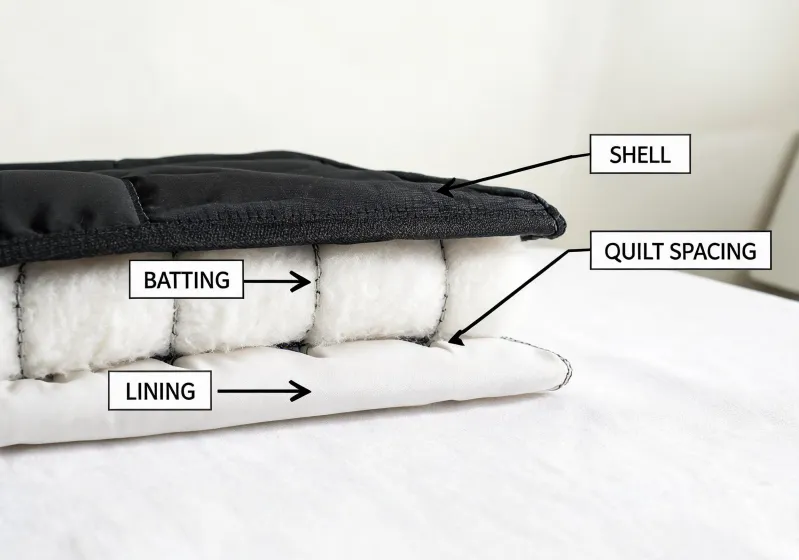
Apparel insulation layer system

Apparel and Workwear

Control shell and lining compatibility, insulation type, basis weight, quilt spacing, compression, moisture and care. A flame-resistant variant must retain its exact test and exposure scope; flame resistant never means fireproof.
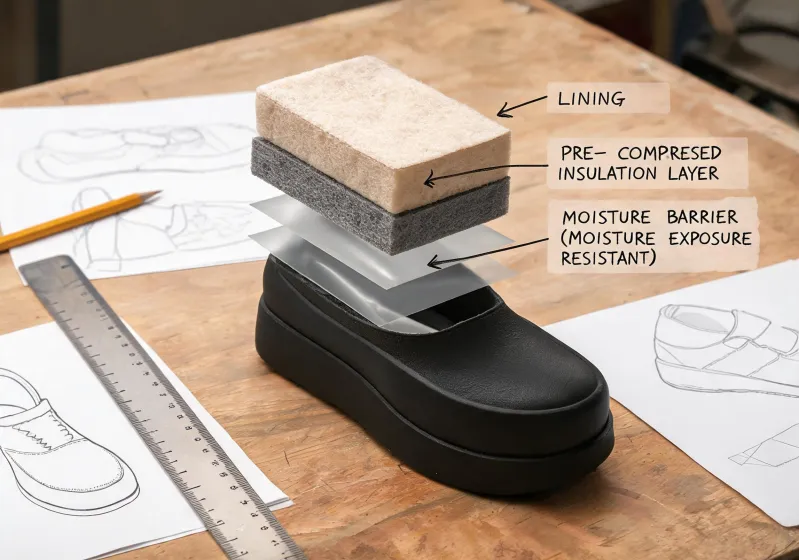
Footwear insulation material stack

Footwear Systems

Use footwear-specific product information and review compression, placement, moisture and the complete upper-lining-insulation construction. Do not infer a temperature rating from fill weight or a consumer boot claim.

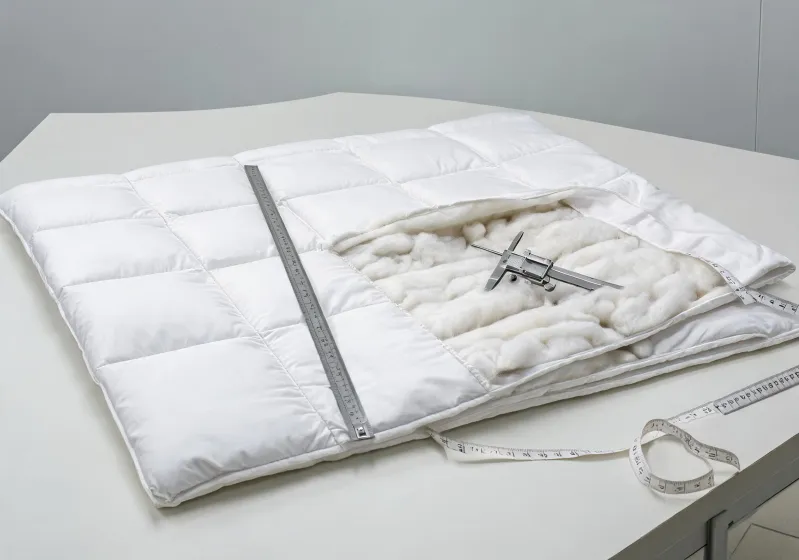
Bedding channel fill prototype

Bedding Constructions

Separate batting from loose-fill products. Fill distribution, channel size, shell fabric, laundering and recovery influence the article, so published clo or thickness data cannot stand alone.

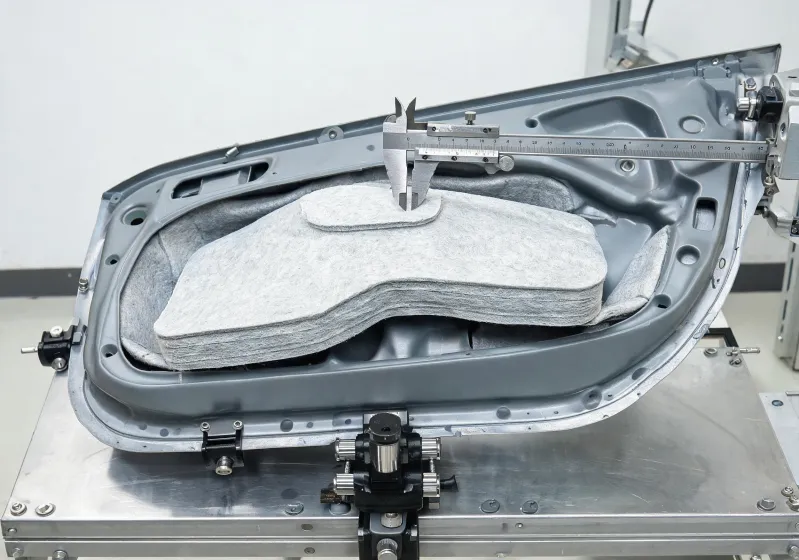
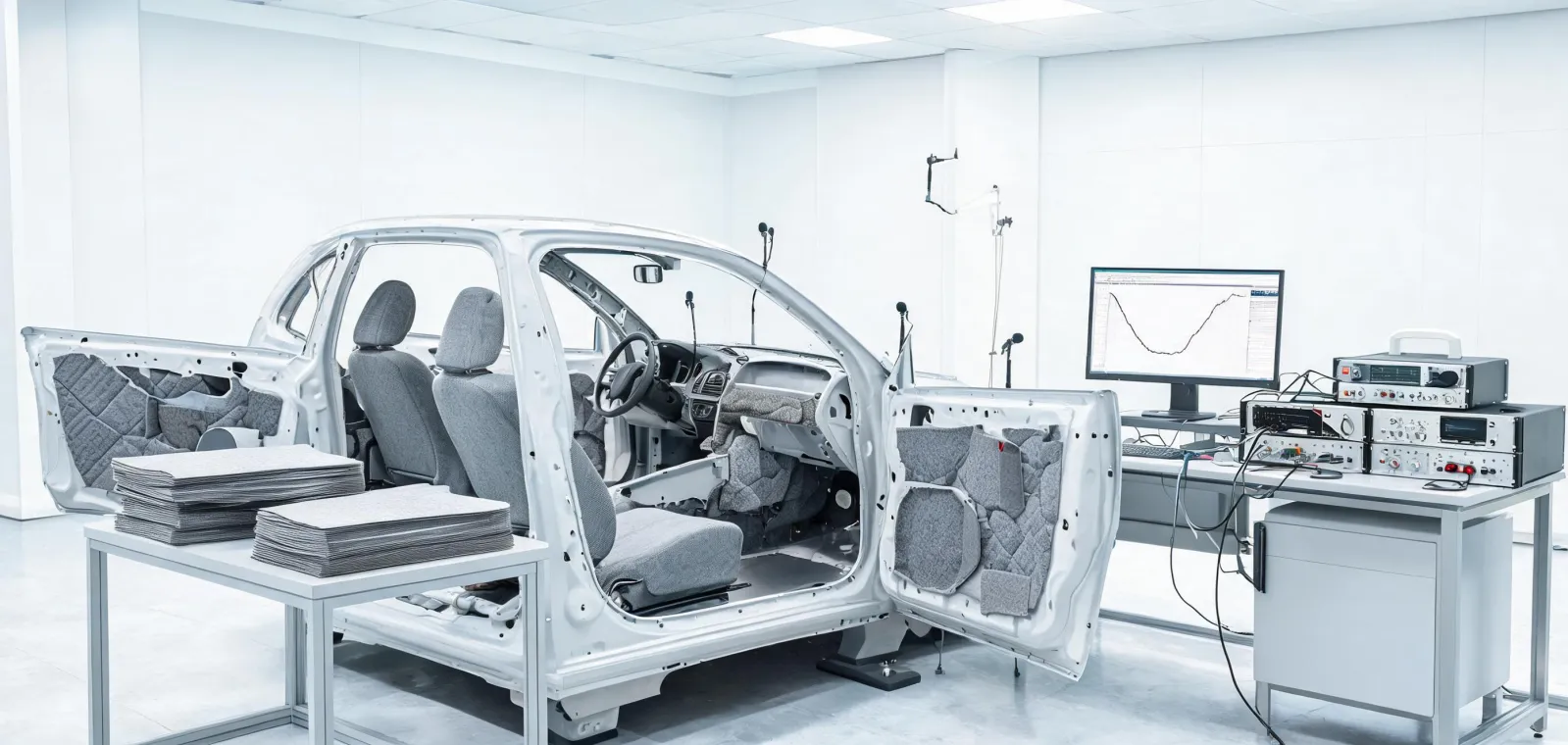
Automotive cavity acoustic absorber

Automotive and Transportation

Link the named acoustic model to cavity location, surface density, thickness, temperature limit, processing and the declared frequency method. Vehicle engineering evidence is not a DIY installation instruction.

Evidence-track comparison

Thermal article data and acoustic model data answer different questions

Review dimensionThermal insulation articleAutomotive acoustic non-woven
IdentityNamed insulation type and material formNamed acoustic model or series
Core inputsBasis weight, thickness or loft, shell, lining and quilt geometrySurface density, thickness, scrim, cavity position and converted geometry
EvidenceClo or thermal method with assembly and conditioningAbsorption response with frequency range, incidence method and specimen setup
ProcessingQuilt-through, channel fill, recovery, care and fiber migration reviewDie cutting, heat sealing, bonding, molding and temperature exposure review
LimitationArticle construction can change published material behaviorModel data does not describe apparel warmth or every vehicle location
Release gateFinished article testing to the applicable requirementConverted part and installation validation in the intended cavity
Published exampleThe 2016 Featherless FL600 TDS identifies 100% polyester loose-fill and discloses ASTM C518 thermal-resistance and ASTM D5736 thickness methods for specified quilt constructions.The February 2026 SM600L TDS identifies a 35% polyester / 65% polypropylene web with a 100% polypropylene non-woven scrim, typical 672 g/m² basis weight and 42 mm thickness.
Do not generalizeFL600 examples depend on shell, lining, channel size, fill method and specimen conditioning; they do not set every article result.SM600L typical data and its stated 120°C continuous-temperature limit apply to that model and test context, not every acoustic material or vehicle position.

Primary-source checkpoints: 3M Thinsulate Featherless FL600 TDS and 3M Thinsulate Acoustic Insulation SM600L TDS. Confirm the current revision before specification.

Material finder matrix

Ask for the evidence that fits the application

Garment

Batting or loose-fill

  • Type and composition
  • Basis weight and thickness
  • Quilt and care conditions
Footwear

Pre-compressed form

  • Footwear-specific type
  • Layer placement
  • Moisture and compression
Bedding

Batting or channel fill

  • Fill distribution
  • Shell and pick count
  • Recovery and laundering
Vehicle

Acoustic non-woven

  • Model and cavity position
  • Surface density and thickness
  • Frequency method and process

Frame the application before selecting the material

Send the named type or model, layer or cavity, target construction and applicable method for a scope-controlled review.